Greta Albrecht · 24 September 2026
Mapping the Connections Between Font Loading Techniques and Initial Display Metrics in Modern Site Builds
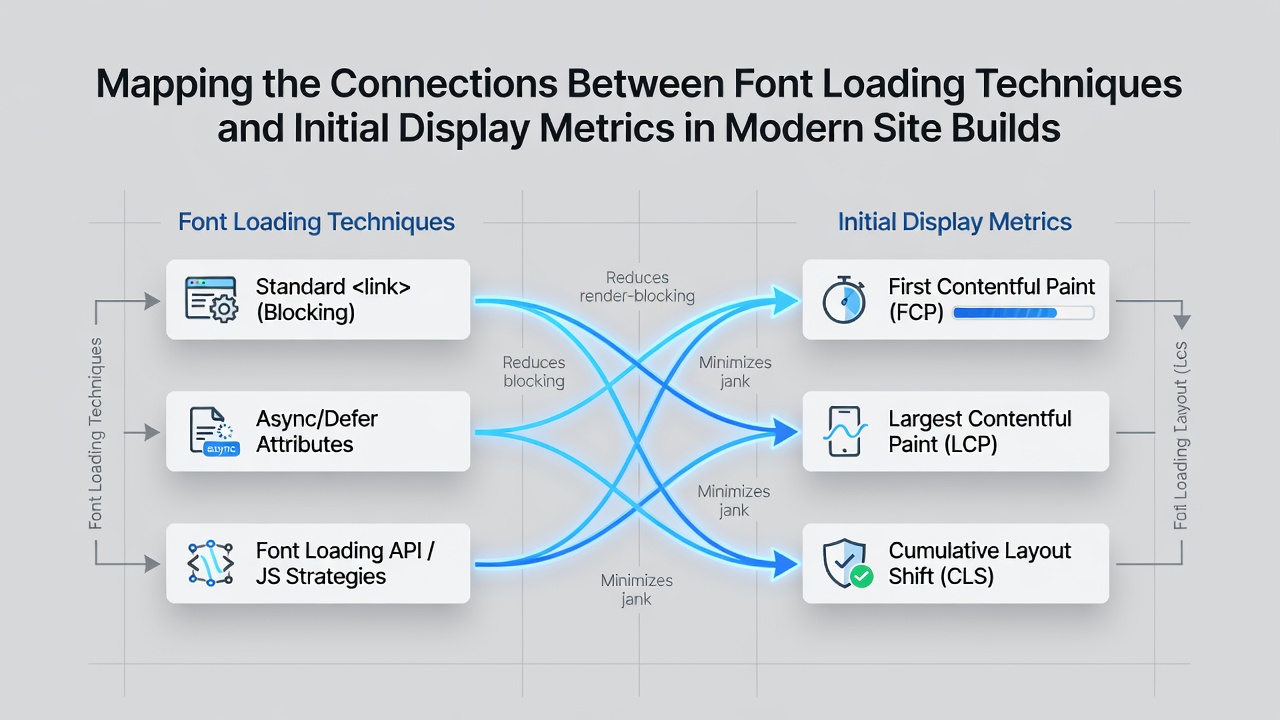
Font loading techniques influence how browsers handle text rendering during the earliest stages of page construction, and developers track these effects through metrics that quantify the time until users see meaningful content on screen. Modern site builds incorporate strategies such as the font-display property, preload directives, and subsetting methods because these approaches alter the sequence in which fonts become available relative to other resources.
Core Font Loading Approaches in Current Practice
Developers rely on several established methods to manage web font delivery, and each method produces distinct timing patterns for when text appears. The font-display CSS descriptor allows sites to specify fallback behavior during the font loading period, while the preload link element instructs browsers to fetch font files earlier in the resource acquisition process. Subsetting reduces file sizes by including only the glyphs needed for a given page, and variable fonts consolidate multiple weights into single files that browsers can interpolate on demand.
Research from the HTTP Archive indicates that sites using font-display: swap experience measurable shifts in first contentful paint timing compared with those that leave the property undefined. Data collected across millions of origins shows that preload directives for fonts correlate with earlier text rendering in cases where the font file would otherwise compete with critical CSS and JavaScript downloads.
Initial Display Metrics and Measurement Frameworks
Initial display metrics capture the moment when users first encounter visible content, and tools such as Lighthouse along with real-user monitoring platforms record these events at scale. First Contentful Paint marks the time when the browser renders the first piece of DOM content, while Largest Contentful Paint identifies when the largest visible element finishes rendering. Cumulative Layout Shift quantifies unexpected movement of page elements, and font loading sequences can contribute to this shift when fallback fonts differ substantially in metrics from the intended typeface.
According to figures published by the Web Performance Working Group at the W3C, sites that implement proper font loading controls demonstrate tighter distributions in Largest Contentful Paint values across both desktop and mobile user agents. Observers note that measurement occurs through both lab-based simulations and field data collected from actual visitors, providing complementary views of how font strategies perform under varying network conditions.
Documented Relationships Between Techniques and Metrics
Empirical data reveals consistent patterns linking specific font loading choices to changes in the timing of initial display events. When sites apply font-display: optional, browsers may skip rendering text until the web font arrives, which extends the period before First Contentful Paint but eliminates layout shifts once the font loads. In contrast, font-display: swap renders fallback text immediately and replaces it once the web font arrives, which shortens First Contentful Paint at the potential cost of a visible swap that can affect user perception.
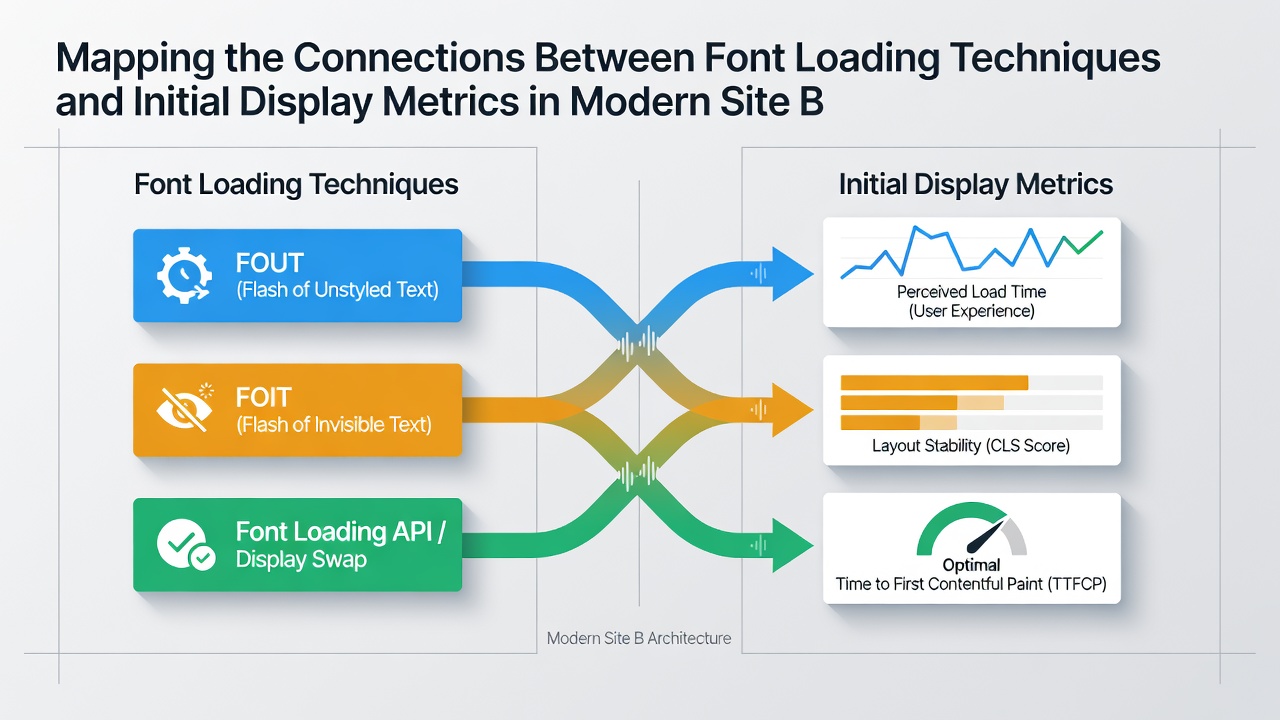
Preloading font files produces earlier availability of the typeface, and studies of production sites indicate corresponding improvements in Largest Contentful Paint when the preloaded font serves as the primary heading or body typeface. Subsetting and variable font usage further reduce the total bytes transferred before text can render, and these reductions appear in performance traces as compressed intervals between navigation start and first paint events. One analysis of sites that adopted variable fonts found that the single-file approach reduced the number of font requests and produced more predictable timing for Cumulative Layout Shift values.
Implementation Patterns Observed Across Modern Builds
Teams constructing contemporary websites integrate font loading logic directly into build pipelines, and automated tools now generate the necessary CSS and HTML directives during compilation. Content delivery networks provide edge-side font optimization services that dynamically subset files based on detected character usage, and these services report performance gains in field data collected after deployment. Developers who combine preload hints with appropriate font-display values achieve more stable metric distributions, particularly on connections with higher latency where resource ordering becomes critical.
Evidence from multiple monitoring platforms shows that pages without explicit font loading controls exhibit greater variance in Largest Contentful Paint across geographic regions, whereas pages with optimized configurations maintain narrower ranges. Those who have examined production telemetry note that fallback font selection also matters because large differences in character width between fallback and intended fonts increase the likelihood of layout shifts during the swap phase.
Conclusion
The relationships between font loading techniques and initial display metrics rest on measurable interactions between resource timing, file size, and rendering behavior. Data collected from diverse origins and user agents continues to guide refinements in how sites deliver typography while preserving performance targets for First Contentful Paint, Largest Contentful Paint, and Cumulative Layout Shift. As measurement tooling evolves, the connections between these elements remain central to site construction practices that prioritize both visual fidelity and efficient initial rendering.