Greta Albrecht · 10 September 2026
Exploring How Registrar Transitions Influence Long-Term Crawl Patterns and Organic Visibility
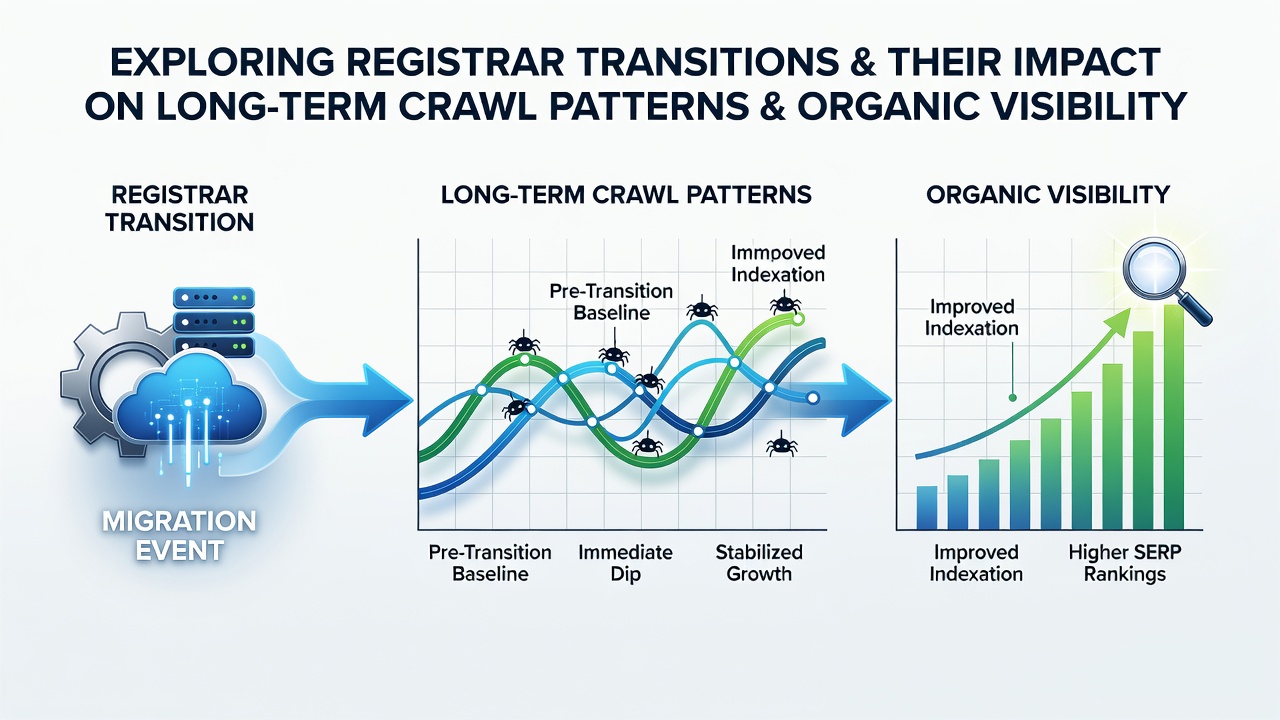
Domain registrar transitions involve transferring management of a domain name from one provider to another, and this process triggers a series of technical adjustments that search engines track through DNS records and nameserver updates. Researchers have documented how these shifts can alter crawl frequency and resource allocation for months afterward, since search engine bots rely on stable resolution paths to discover and reindex content regularly. Data from multiple industry analyses shows that propagation delays during the switch often lead to temporary gaps in crawling schedules, particularly when nameserver configurations change alongside the registrar move.
DNS Propagation and Initial Crawl Adjustments
During a registrar transition the domain's authoritative nameservers may remain unchanged or shift depending on the new provider's setup, and this distinction determines the scope of impact on search engine activity. Observers note that when nameservers stay consistent the transition tends to produce minimal disruption to crawl patterns, whereas full nameserver replacements require global DNS updates that can span 24 to 48 hours or longer in some regions. Studies of web infrastructure reveal that search engines monitor these resolution events closely because inconsistent responses during propagation can signal potential issues, prompting bots to reduce crawl rates until stability returns.
Longer-term effects emerge when the transition coincides with other site modifications such as certificate renewals or hosting migrations, since combined changes compound the time required for full propagation across all recursive resolvers. Evidence from network monitoring indicates that sites experiencing registrar moves in isolation recover crawl parity within weeks, yet those with overlapping updates show extended periods of reduced indexing frequency that last into subsequent quarters.
Impact on Indexing and Organic Visibility Metrics
Organic visibility metrics respond to registrar transitions through shifts in crawl budget allocation, where search engines prioritize domains demonstrating consistent availability and fast response times. Figures from large-scale domain tracking projects demonstrate that sites undergoing clean transfers without downtime maintain steady indexing rates, while those encountering resolution errors during the handoff experience temporary drops in indexed pages that require manual intervention to reverse. In September 2026 several registrars implemented enhanced transfer protocols that reduced average propagation windows, and subsequent reports confirmed quicker restoration of normal crawl volumes for domains that adopted the new procedures promptly.
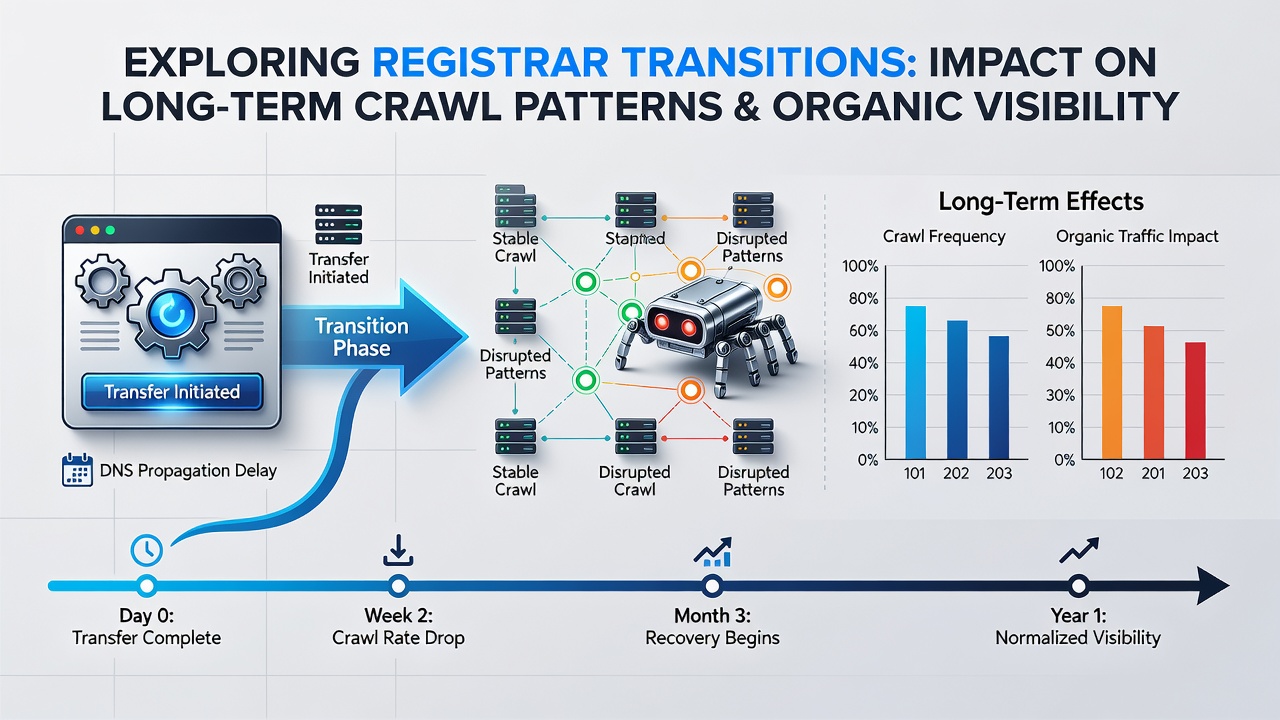
Search engines also factor in historical domain data when evaluating post-transition trust signals, so abrupt changes in registration details can trigger additional verification steps that delay re-crawling of deeper site sections. Analysts examining multi-year datasets have found that domains with frequent registrar activity show slightly higher variance in crawl depth compared to stable registrations, although the variance normalizes once the new registrar relationship exceeds six months without further alterations.
Long-Term Patterns Observed Across Case Examples
One documented case involved a mid-sized e-commerce platform that completed a registrar transfer in early 2024 and recorded a 12 percent reduction in crawl requests during the following quarter before patterns stabilized at pre-transition levels. Another example from academic web archives tracked educational domains that changed registrars during routine renewals and noted sustained crawl consistency when the transition occurred without nameserver modifications. These patterns illustrate how the combination of registrar choice and technical configuration determines whether long-term visibility recovers smoothly or requires targeted adjustments to robots.txt files and sitemap submissions.
Industry organizations such as ICANN have published guidelines that outline best practices for minimizing DNS-related interruptions, and compliance with those steps correlates with faster return to baseline crawl rates according to aggregated monitoring data. Meanwhile reports from the Canadian Internet Registration Authority highlight similar outcomes for .ca domains, where structured transfer processes limit the duration of any visibility fluctuations.
Conclusion
Registrar transitions influence crawl patterns and organic visibility through a combination of DNS mechanics, propagation timing, and search engine response protocols that unfold over weeks and months rather than days. Data collected across diverse domain portfolios confirms that well-executed transfers produce only transient effects, while incomplete configurations extend the period of adjustment. Observers tracking these events emphasize the value of monitoring crawl statistics before and after each transition to identify any deviations that persist beyond the initial propagation window.