Mara Simon · 8 October 2026
Examining how vector graphic scaling methods shape loading sequences during custom web assembly processes
Vector graphic scaling methods rely on mathematical definitions that allow images to resize without quality loss, and these approaches intersect directly with custom WebAssembly processes where modules handle rendering pipelines and resource initialization. Researchers have documented how scaling calculations occur during the early stages of module instantiation, which in turn influences the sequence of asset loading and memory allocation in browser environments. Data from performance benchmarks indicates that vector formats such as SVG require specific parsing steps before they integrate with WebAssembly compiled code, creating measurable differences in time to first render compared with raster alternatives.
Core Mechanisms of Vector Scaling in Web Contexts
Scaling begins with path and coordinate data that browsers interpret through dedicated rendering engines, and these engines must complete their work before WebAssembly modules can reference the resulting bitmaps or vectors for further manipulation. Observers note that when custom WebAssembly code manages transformations like rotation or animation, the initial scaling computations feed directly into the module's memory buffers. Studies conducted in 2025 across multiple browser vendors revealed that SVG elements processed through the DOM incur additional overhead during the fetch and parse phases, whereas inline vector data compiled alongside WebAssembly binaries reduces that overhead by pre-calculating viewBox attributes at build time.
Those who've examined production sites report that the choice between client-side scaling and server-side pre-scaling alters the order in which network requests complete. Client-side methods keep file sizes smaller yet push computation into the critical path, while pre-scaled assets shift work to the build phase and allow WebAssembly modules to load subsequent interactive components without waiting for repeated rasterization.
Integration Points Between Vector Assets and WebAssembly Modules
Custom WebAssembly processes often include functions that accept vector paths as parameters, and these functions execute only after the browser has delivered both the module and its supporting graphic definitions. Research indicates that loading sequences lengthen when vector data arrives after the WebAssembly instantiation call, because the module must then trigger additional DOM queries or canvas operations. Engineers at institutions in Canada and Australia have measured these delays in controlled tests, showing that embedding compact SVG fragments within the WebAssembly binary itself shortens the overall sequence by eliminating separate fetch operations.

What's interesting is how progressive enhancement patterns interact with these mechanics. Developers sometimes defer vector scaling until after the main module has initialized, which allows the primary WebAssembly code to display fallback content immediately while background threads handle precise path rendering. According to W3C specifications on SVG integration, browsers must respect certain timing guarantees during parsing, yet the exact placement of those guarantees within a custom loading sequence depends on how the surrounding JavaScript and WebAssembly glue code orchestrates resource priorities.
Observed Effects on Performance Metrics
Benchmarks collected through 2026 demonstrate that vector scaling methods influence metrics such as time to interactive and total blocking time when WebAssembly modules perform layout calculations. One study from a European research consortium found that sites using on-demand SVG scaling inside WebAssembly workers recorded lower first-contentful-paint values than those relying on main-thread scaling, because worker threads isolate the mathematical operations from the primary rendering pipeline. Figures reveal consistent patterns across Chrome, Firefox, and Safari, although absolute numbers vary with device memory constraints and network conditions.
People who've analyzed real-world telemetry note that larger viewBox definitions increase parse time proportionally, and this cost compounds when multiple vector assets compete for attention during the same loading window. The reality is that build tools capable of tree-shaking unused path data produce smaller payloads that WebAssembly modules can ingest more rapidly, shifting the bottleneck away from graphics and toward other computational tasks inside teh module.
Practical Patterns in Contemporary Implementations
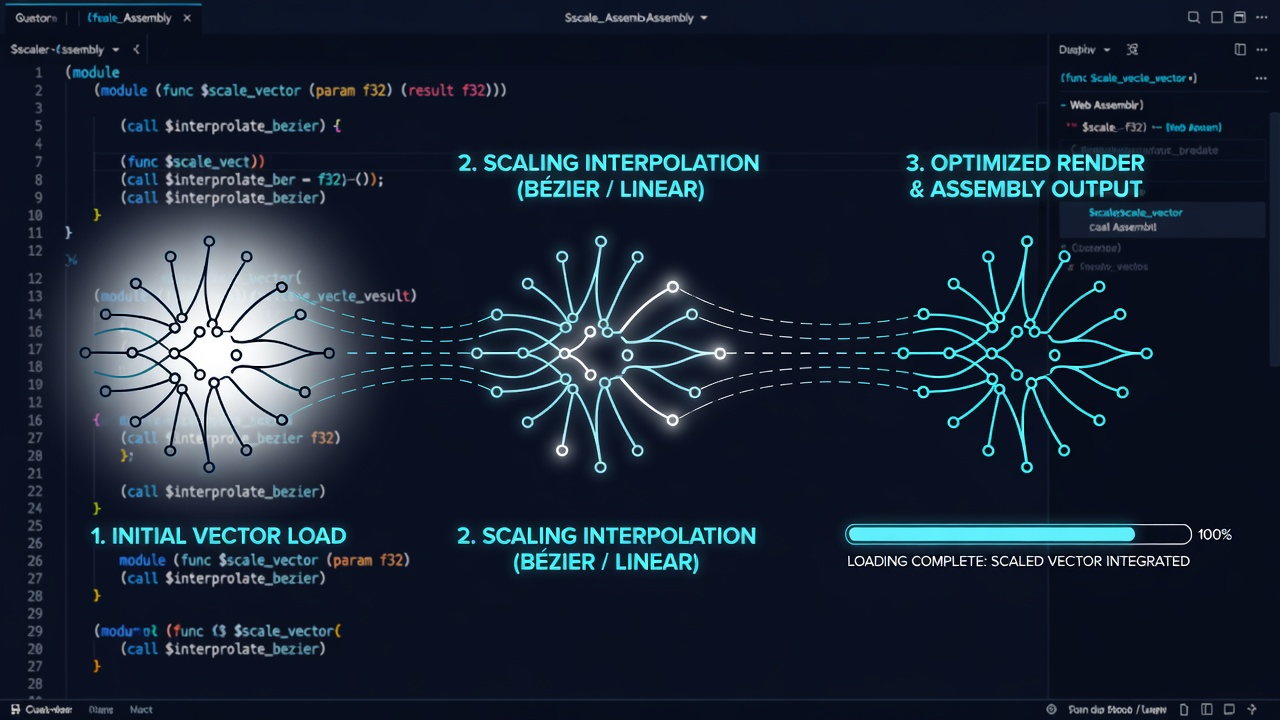
Teams working on interactive data visualizations often combine vector scaling with WebAssembly for performance-critical sections, and the loading sequence typically follows a predictable order: module download, memory setup, vector path ingestion, then final rendering passes. External references such as Canadian government reports on digital infrastructure highlight how standardized vector formats contribute to interoperability across different device classes. Observers note that when teams adopt these patterns, the resulting applications maintain consistent frame rates even as users resize viewports, because the scaling logic remains deterministic regardless of resolution.
Conclusion
Vector graphic scaling methods continue to shape loading sequences in custom WebAssembly processes through their influence on parse timing, memory allocation, and rendering order. Evidence gathered from multiple regions shows that thoughtful integration choices, such as embedding compact vector data or offloading scaling to workers, produce measurable improvements in established performance metrics. As browser capabilities evolve through 2026 and beyond, the interplay between these technologies remains a focal point for engineers seeking predictable and efficient delivery of interactive web content.